
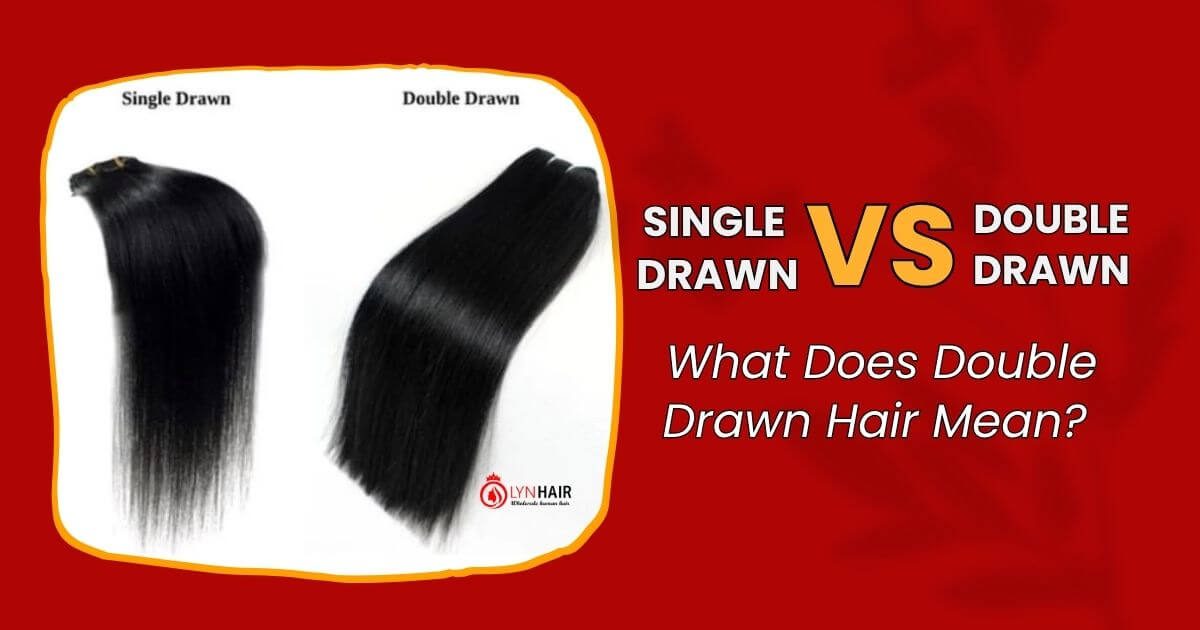
SINGLE DRAWN VS DOUBLE DRAWN: WHAT DOES DOUBLE DRAWN HAIR MEAN?
Jun
If you have ever shopped for hair extensions, you have likely run into terms that sound more like engineering jargon than beauty descriptors. Among the most common—and confusing—are single drawn and double drawn hair.
Whether you are a salon owner sourcing stock or a customer planning your next hair installation, understanding these terms is crucial. Making the wrong choice can lead to extensions that look thin and wispy at the ends, or bundles that are too heavy for your natural hair to support.
In this comprehensive guide, we will break down exactly what does double drawn hair mean, compare it head-to-head with single drawn extensions, and explain how to choose the right option for your hair type and styling goals.
What Does Single Drawn Hair Mean?
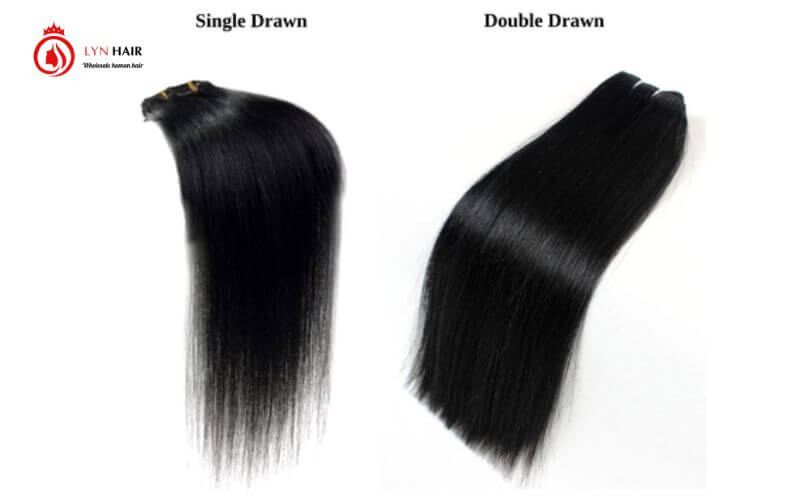
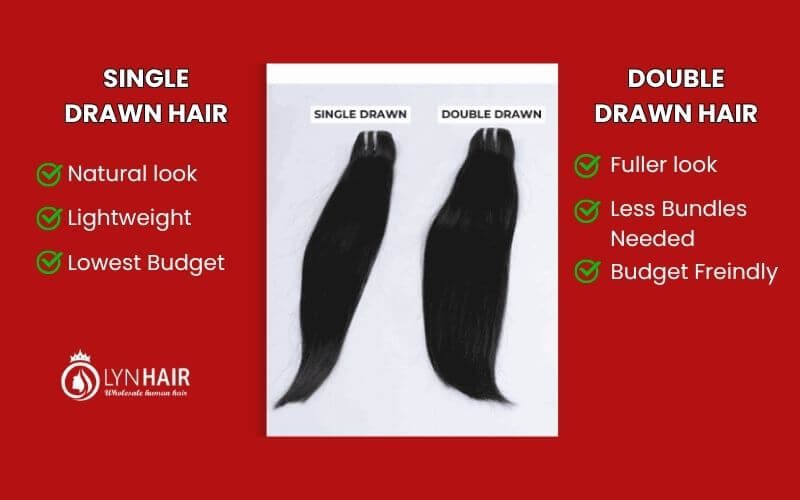
Single drawn hair refers to a bundle of hair extensions where the individual strands vary in length. During the collection process, the hair is sorted and wefted without removing the shorter strands. As a result, a single-drawn bundle contains a natural mix of short, medium, and long hairs.
Example of Single Drawn Hair: If you purchase a 16-inch single drawn weft bundle, only about 50% to 60% of the hair strands will measure the full 16 inches. The remaining 40% to 50% will consist of shorter lengths, typically ranging from 12 to 14 inches.
This creates a bundle that is thick and full at the top (near the weft) but gradually tapers off, becoming thinner towards the ends.
Read More: THE ULTIMATE GUIDE TO VIETNAMESE HAIR EXTENSIONS: SOURCING, QUALITY & STYLING
What Does Double Drawn Hair Mean?
So, what does double drawn mean in hair extensions?
Double drawn hair is a premium type of extension where the majority of the hairs in the bundle are of the exact same length—typically 70% to 80% (and up to 90% in luxury-grade hair).
During manufacturing, workers manually pull out the shorter hair strands from the bundle. This meticulous, labor-intensive process ensures that the bundle maintains a consistent, uniform thickness from the root all the way to the tips.
Example of Double Drawn Hair : If you buy a 16-inch double drawn bundle, 70% to 80% of the strands will measure exactly 16 inches. The remaining 20% to 30% of the strands vary only slightly (between 12 to 14 inches) to allow the extensions to blend seamlessly with your natural hair.
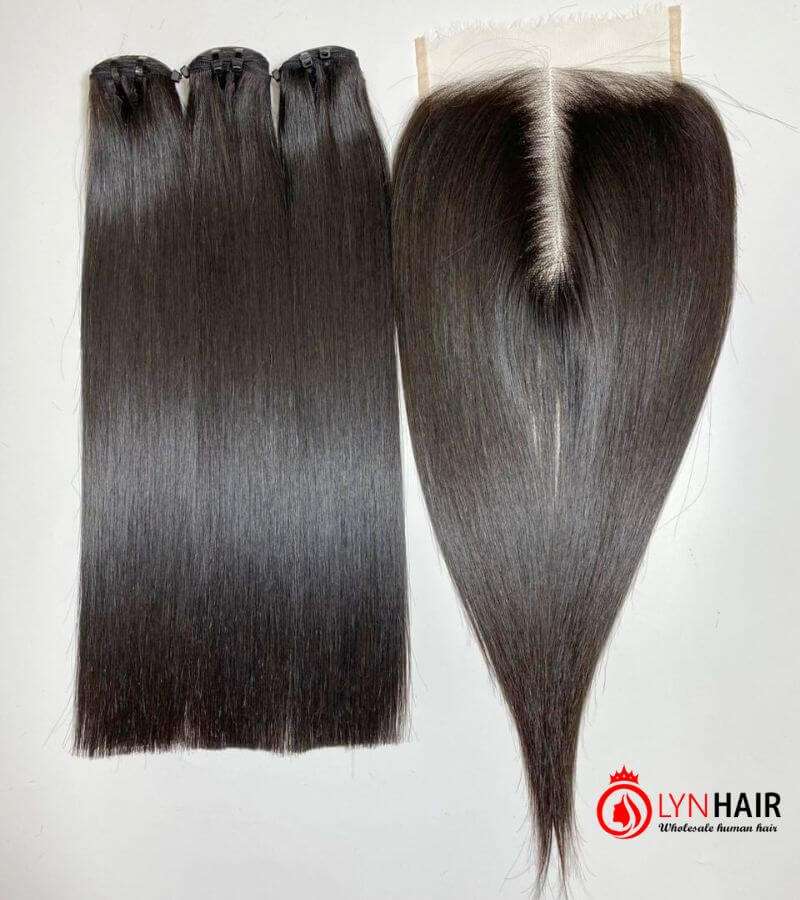
Because the short hairs are manually eliminated, the bundle is thick, full, and voluminous at the ends, creating a polished, blunt-cut look.
Head-to-Head Comparison: Single Drawn vs Double Drawn
This comparison table outlines the key differences in structure, price, and wearability between single drawn vs double drawn hair.
|
Feature |
Single Drawn Hair |
Double Drawn Hair |
|
Longest Hair Ratio |
50% – 60% of strands are full length. |
70% – 80% (or higher) of strands are full length. |
|
Volume Distribution |
Thick at the roots; tapers off at the ends. |
Uniform thickness from root to bottom. |
|
Appearance & Style |
Natural, layered, and wispy. |
Thick, full, blunt, and polished. |
|
Price Point |
Most affordable / Budget-friendly. |
Slightly more expensive (due to manual labor). |
|
Full Wig Requirement (Length 6–12″) |
3 bundles + 1 closure/frontal. |
2 bundles + 1 closure/frontal. |
|
Scalp Tension |
Very low; lightweight and easy to wear. |
High at long lengths (can pull on fine hair). |
|
Friction & Tangling |
Low; thin ends reduce friction at the neck. |
Moderate to High; thick ends can rub and tangle at the neck. |
|
Styling Versatility |
Great for layered cuts and daily natural wear. |
Excellent for blunt bobs, high volume, and glam waves. |
Insider Truth: Why Drawn Ratios Are Just Guidelines (The Length Factor)
While the hair industry uses standard grading percentages (Single Drawn = 50-60%, Double Drawn = 70-80%, and Super Double Drawn = 90-95%), you must understand that these ratios are not absolute. They change dramatically based on the length of the hair bundle you are buying:
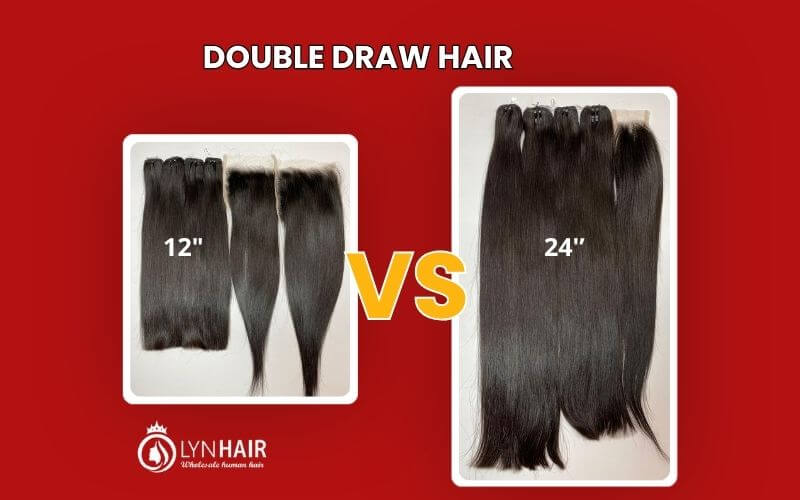
For Long Hair (28″ – 30″+): Sourcing raw hair that measures 30 inches is extremely rare. Therefore, achieving a true 90% to 95% full-length ratio (Super Double Drawn) at these lengths is nearly impossible. Even the highest-quality long bundles will naturally have some taper at the ends.
For Short Hair (6″ – 8″): Because the difference between the longest and shortest strands is only a few inches, even a single drawn short bundle will look naturally thick, full, and blunt from root to tip, closely mimicking the appearance of double or super double drawn hair.
Read More: SUPER DOUBLE DRAWN HAIR VS DOUBLE DRAWN HAIR: WHAT IS THE DIFFERENCE?
Pros and Cons: The Styling Reality
While double drawn hair is often marketed as “better” because it is more expensive, both types have distinct practical advantages and disadvantages when worn daily.
Single Drawn Hair
Pros:
Natural look: It mimics the natural growth pattern of human hair, which grows at different rates. It blends easily without looking like blocky extensions.
Lightweight: It puts very little weight on your scalp, making it comfortable for all-day wear.
Lowest Budget: It requires less manual labor to produce, making it highly affordable.
Easy Maintenance: Because the ends are tapered and light, there is less friction and tangling at the neck/shoulders.
Cons:
Thin Ends: The ends can look sparse or uneven if the hair is very long.
Less Bounce: It does not provide the dramatic, bouncy volume that most people seek in extensions.
Double Drawn Hair
Pros:
Fuller Look: Gives an instantly thick, glamorous, and voluminous look from root to tip.
Less Bundles Needed: Because the hair is thick to the ends, you need fewer bundles to make a full wig or install.
Perfect for Blunt Styles: Ideal for sharp, blunt-cut bobs and high-fashion styles.
Cons:
Follicle Strain: Because it contains far more long hair, it is much heavier. Women with extremely fine or thin natural hair should avoid it, as the weight can strain hair follicles and cause traction damage.
Friction Tangling: The dense, uniform blunt ends are prone to rubbing against the neck and shoulders. When mixed with neck sweat, it can tangle more easily than single drawn hair and requires frequent brushing.
Higher Cost: The manual sorting process increases the manufacturing cost.
Single Drawn vs Double Drawn: Which Is Better?
Choosing between double drawn hair vs single drawn hair comes down to your natural hair density, budget, and desired look.
Choose Single Drawn Hair if: You want a highly realistic, everyday layered look, have fine/fragile natural hair that cannot support heavy weight, or want to save money. Expert Tip: You can buy longer single drawn extensions and ask your stylist to trim 2–3 inches off the ends to achieve a fuller, double-drawn look on a budget.
Choose Double Drawn Hair if: You love dramatic, thick, high-volume hairstyles, want a clean, blunt-cut bob, or are making a full wig using fewer bundles.
Source Premium Double Drawn Hair from Lyn Hair
If you are looking for high-quality, authentic hair extensions, sourcing from a reputable factory is key.
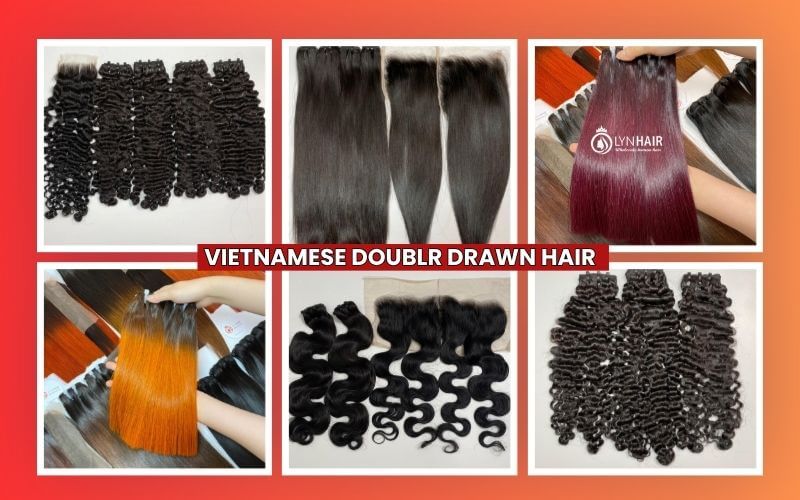
Lyn Hair is one of Vietnam’s top hair manufacturers and exporters, specializing in premium human hair extensions.
100% Human Hair: All extensions are crafted from high-grade human hair with aligned cuticles, ensuring exceptional softness, natural shine, and a tangle-free experience.
Factory-Direct Pricing: By eliminating the middleman, Lyn Hair – Top Vietnamese hair supplier offers premium single and double drawn extensions at competitive factory prices.
Diverse Customization: From bone-straight bundles to diverse wavy and curly textures, Lyn Hair caters to all wholesale and retail needs.
For expert advice, custom orders, or to receive our wholesale catalog, contact Lyn Hair directly:
💬 WhatsApp / Hotline: +84 936 085 069
Frequently Asked Questions (FAQ)
What does double drawn hair mean?
Double drawn hair means that shorter hair strands have been manually removed from the bundle during manufacturing. This ensures that 70% to 80% of the hairs are of the exact same length, making the bundle equally thick from top to bottom.
Is double drawn hair better than single drawn?
Double drawn hair is not inherently “better”—it is just different. Double drawn is best for those wanting maximum thickness, volume, and a blunt finish. Single drawn is better for those wanting a natural, tapered look, less weight on their scalp, and a more affordable price.
How many bundles of double drawn hair do I need for a full wig?
Because double drawn hair is thick all the way to the ends, you only need 2 bundles + 1 closure/frontal for lengths between 6 to 12 inches. For single drawn hair of the same length, you would typically need 3 bundles + 1 closure to achieve the same fullness at the bottom.
