
THE ULTIMATE GUIDE TO VIETNAMESE HAIR EXTENSIONS: SOURCING, QUALITY & STYLING (2026)
Jun
Vietnamese hair extensions have become one of the most sought-after products in the global hair industry thanks to their durability, natural appearance, and excellent bleaching performance. In this guide, you’ll learn how Vietnamese hair is sourced, how it compares with other hair origins, and how to choose a reliable supplier. .
1. What is Vietnamese Hair? (Origin and Core Characteristics)
Before diving into the technical details, it is important to understand what makes vietnamese hair unique at a biological level.
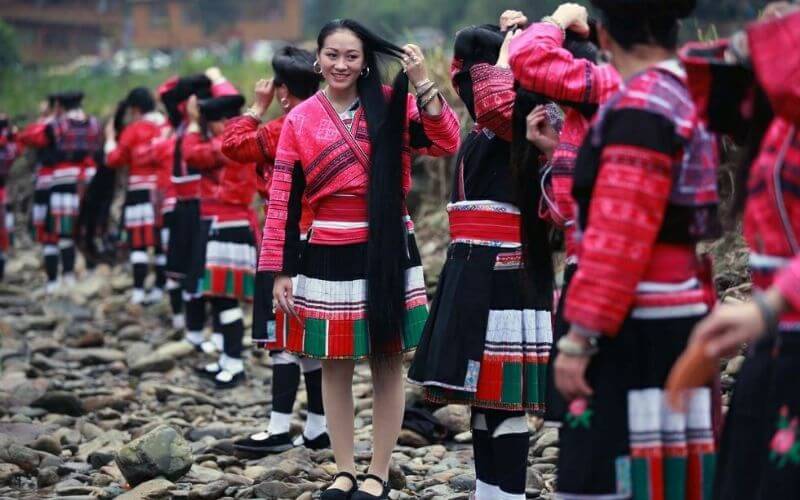
Unlike mass-collected hair from various regions, authentic Vietnamese hair is sourced primarily from women living in the highland, rural, and mountainous areas of Vietnam (such as the northern mountainous provinces). These regions have a cooler climate, which naturally protects the hair from sun damage.
Furthermore, the donors maintain a healthy, active lifestyle and consume mineral-rich diets. More importantly, they practice traditional hair care routines. Instead of using chemical-heavy commercial shampoos, they wash their hair using natural, organic herbs such as:
- Bo Ket (Locust Fruit): A natural soapberry that cleanses the scalp and adds a deep, natural shine.
- Pomelo Peel: Rich in essential oils that stimulate hair growth and strengthen the roots.
- Lemongrass and Holy Basil: Natural anti-fungal herbs that keep the hair clean, fresh, and free from dandruff.
This traditional care, combined with genetics, results in hair that is exceptionally strong, naturally thick, and structurally round. Unlike fine Caucasian hair or highly textured African hair, Vietnamese hair strands are robust and contain a rich cortex layer, making them highly resistant to heat styling, bleaching, and daily wear.
2. Why Choose Vietnamese Hair Extensions?
If you are running a hair business, your reputation depends on the quality of your product. High client retention and low return rates are the keys to profitability. Here is why investing in vietnamese hair extensions is a smart business decision:
Natural Strength and Thickness
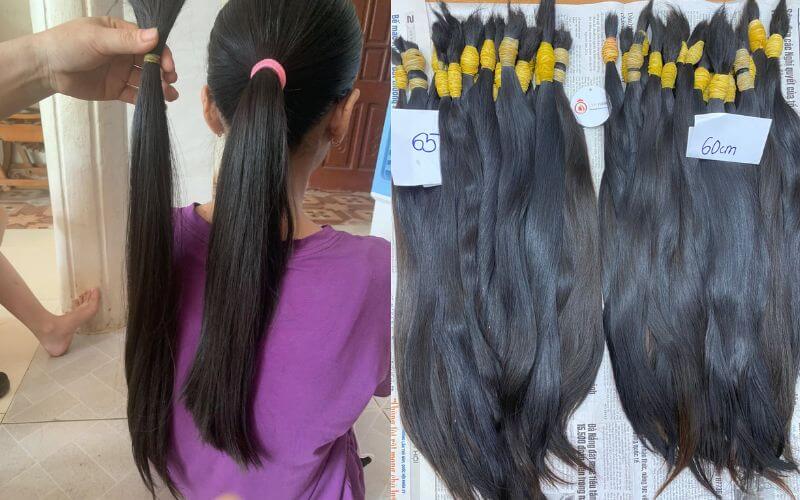
Because of the cuticle thickness and round structure, each strand of Vietnamese hair has an inherent bounce and weight. When you hold a bundle of raw Vietnamese hair, it feels dense and substantial. It doesn’t look flat or limp; instead, it has a natural, healthy luster that blends seamlessly with both natural and relaxed hair textures.
Flawless Bleaching and Coloring Performance
For high-end salons, the ultimate test of hair quality is its bleaching capability. Cheap hair that has been treated with acid or mixed with synthetic fibers will melt, break, or turn orange when exposed to bleach.
Authentic raw vietnamese hair has intact, fully aligned cuticles. Because it has never undergone chemical processing, it can easily lift to a clean, bright #613 platinum blonde or light ash blonde shades while maintaining its elasticity, softness, and structural integrity.
Exceptional Lifespan
While cheap, silicone-coated extensions from trading companies last only 3 to 6 months before becoming dry and tangled, high-grade Vietnamese hair extensions last over 2+ years with proper maintenance. For your clients, this represents an excellent return on investment, which builds long-term trust in your salon brand.
3. Market Comparison: Vietnamese Hair vs. Other Origins
To help you make the best decision for your inventory, let’s look at how Vietnamese hair compares to other popular hair origins on the market
|
Comparison Criteria |
Vietnamese Hair |
Chinese Hair |
Indian Hair |
Cambodian / Brazilian Hair |
|
Texture |
Naturally straight, silky, smooth. |
Straight but quality varies by source. |
Wavy to curly, finer strands. |
Straight to wavy, fuller texture. |
|
Sourcing |
Individual donor hair, aligned bundles. |
Mixed sourcing from multiple origins. |
Temple donations or mixed collection. |
Rural donor collection. Note: “Brazilian” is marketing hype. |
|
Processing |
Minimal processing, cuticle aligned. |
Often more processed depending on grade. |
Varies from raw to chemically treated. |
Usually lightly processed. |
|
Bleaching |
Excellent lift to high blonde levels. |
Results vary based on processing history. |
Moderate bleaching performance. |
Good lift with proper technique. |
|
Weight & Shine |
Medium weight, natural luster. |
Varies by supplier and grade. |
Lightweight with subtle shine. |
Medium-heavy with moderate natural shine. |
|
Lifespan |
18–36 months. |
6–12 months. |
6–18 months. |
12–18 months. |
|
Supply |
Stable supply, long lengths available. |
Large-scale availability. |
Moderate availability. |
More limited supply. |
|
Best For |
Premium extensions and wigs. |
Budget and mass-market products. |
Natural waves and textured styles. |
Volume and curl retention. |
Read More: VIETNAMESE HAIR VS BRAZILIAN HAIR
4. Classifications of Vietnamese Hair Extensions
When sourcing from Vietnamese hair vendors, you will encounter several classifications. Understanding these terms is critical to avoiding buying the wrong grade for your clients.
Raw Vietnamese Hair (The Gold Standard)
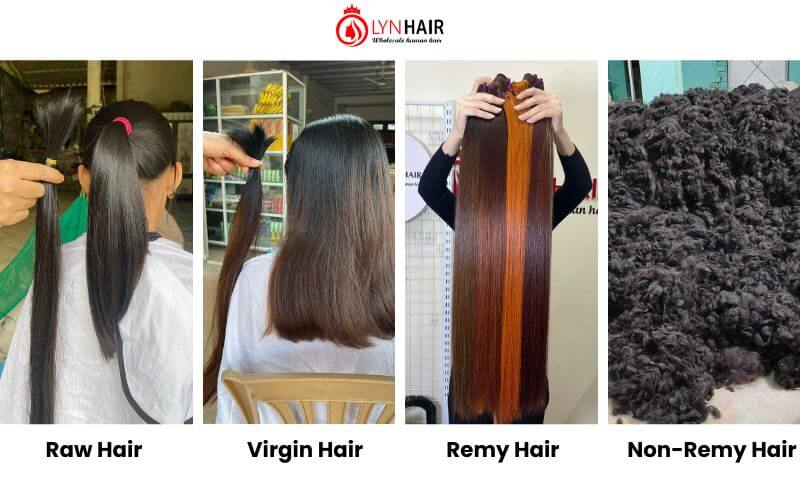
Raw vietnamese hair bundles is the purest form of hair available. It is cut directly from a single donor, washed only with water and mild shampoo, and has never been subjected to steam, heat, or chemicals. Because it comes from a single donor, the cuticle direction is 100% aligned from root to tip.
The Lyn Hair Advantage: Real raw hair naturally varies in texture depending on the donor. While other vendors mix these textures, Lyn Hair specializes in meticulous sorting. They offer:
- Silky Baby-Thin Raw Hair: Soft, fine, and thin strands that blend perfectly with Caucasian and European hair textures.
- Standard Raw Hair: Thick, textured, and strong strands that perfectly bleach and dye.
Virgin Vietnamese Hair
Vietnamese virgin hair refers to hair collected from 1 or 2 donors. However, unlike raw hair, virgin hair has been touched slightly by chemical treatments—such as dyeing or perming—by the donor before it was cut. Because of this prior chemical history, it cannot be bleached or colored as cleanly or easily as pure raw hair. In the hair market, it is common for many suppliers to label this quality tier as “raw hair” to charge premium rates, but they will not provide a bleaching guarantee for it.
Remy Vietnamese Hair
Vietnamese remy hair is hair where the cuticles are kept aligned in the same direction. A bundle of remy hair may contain different hair donors. Remy hair has undergone light processing, such as high-temperature steam styling to create wavy or curly patterns (like body wave or deep curly). Because the cuticle structure is intact and aligned, Remy hair does not tangle and is highly durable.
Non-Remy Hair
This is collected from hair salons, hair brushes, and floor sweepings. Because the strands are gathered randomly, the cuticles run in opposite directions. When washed, the cuticles hook into each other, causing immediate tangling. Factories coat this hair in heavy silicone to make it sellable. Avoid non-Remy hair entirely for salon use
5. Standard Grades & Textures Available
To order effectively, you need to understand the hair grading system used by Vietnamese factories. Unlike the arbitrary “9A/10A/12A” grading system used by Chinese vendors, Vietnamese factories use a transparent system based on the ratio of full-length hair strands.
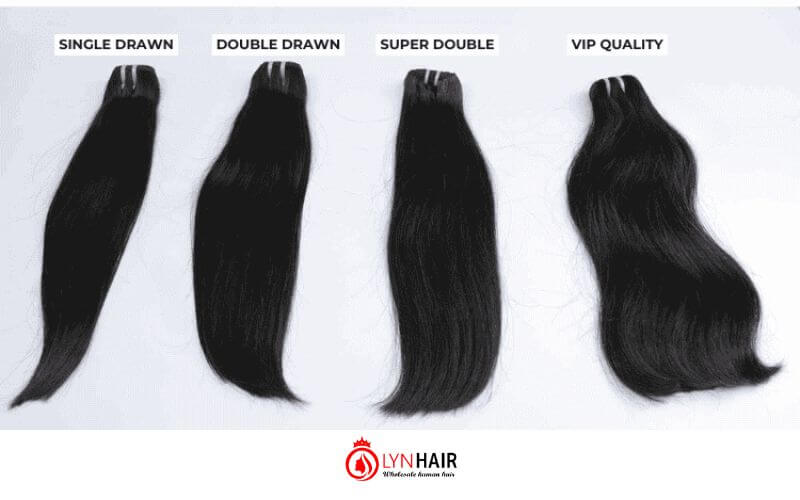
Three Standard Grades (Bundle Thickness)
- Single Drawn:
-
- Contains about 40% to 50% of strands that are of the full advertised length.
- The remaining strands are shorter, resulting in a naturally tapered look with thinner ends.
- Best For: Clients who want a natural, layered haircut on a budget.
- Double Drawn:
-
- Contains about 70% to 80% of strands that are of the full advertised length.
- The ends of the bundle are full, thick, and healthy.
- Best For: The most popular standard grade globally, offering the perfect balance of volume and price.
- Super Double Drawn:
- Contains 80% to 95% (depend on supplier) of strands that are of the full advertised length .
- The bundle is almost completely uniform in thickness from the top to the very bottom.
- Best For: Luxury boutique clients who demand maximum volume, fullness, and a blunt-cut look.
Read More: SINGLE DRAWN VS DOUBLE DRAWN
Popular Textures and Styles
- Bone Straight Hair: The signature product of the Vietnamese hair market. It is naturally straight, sleek, and possesses a glass-like shine. It does not puff up in humid weather and remains bone straight even after washing.
- Wavy & Curly Textures: Includes popular styles like Body Wave, Deep Wave, Water Wave, and Kinky Curly.
IMPORTANT: Because natural Vietnamese hair is straight, these curls are created using steam styling technology (wrapping hair around aluminum rollers and using high-pressure steam). No chemical perm lotions are used, which preserves the cuticle health and ensures the hair can still be colored.
6. Popular Types of Vietnamese Hair Extensions
A professional Vietnamese hair factory should be a one-stop-shop for all extension types. Here are the most popular forms of extensions you can order:
- Bulk Hair (Braiding Hair): Loose, unsewn human hair tied in bundles with rubber bands. In premium hair sourcing, this serves a dual purpose: it is the raw material used by wig makers to ventilate lace closures, frontals, and full lace wigs, and it is also highly sought after by stylists as premium human hair for braiding (ideal for goddess braids, bohemian twists, and micro-braids where synthetic hair is avoided to prevent tangling and allow heat styling).
- Weft Hair Extensions (Machine Weft): Hair strands sewn together onto a track by a machine. This is the traditional, highly requested method for sew-in installations, especially in the US and African markets.
- Tape-in & Clip-in Hair Extensions: Pre-taped or clipped extensions designed for quick, non-damaging installations. They are highly popular among retail consumers who want to add length and volume at home.
- Pre-bonded hair extensions (I-Tip, U-Tip, Flat-Tip, V-Tip): Pre-bonded strands tipped with high-quality keratin. Stylists use hot or cold fusion tools to install these strand-by-strand, creating a natural, highly movable result.
7. How to Identify Authentic Vietnamese Hair Extensions
With many vendors falsely claiming to sell pure Vietnamese hair, you must know how to run a quality audit on your samples. Use these three simple tests:
The Touch Test (Texture Check)
Rub the hair bundle between your hands. Authentic raw hair feels smooth and soft, but you should feel a natural texture and weight. If the hair feels oily, waxy, or excessively slippery, it has likely been coated in silicone. If you slide your fingers up the strand (from tip to root), you should feel a slight resistance—this indicates that the cuticles are intact and present.
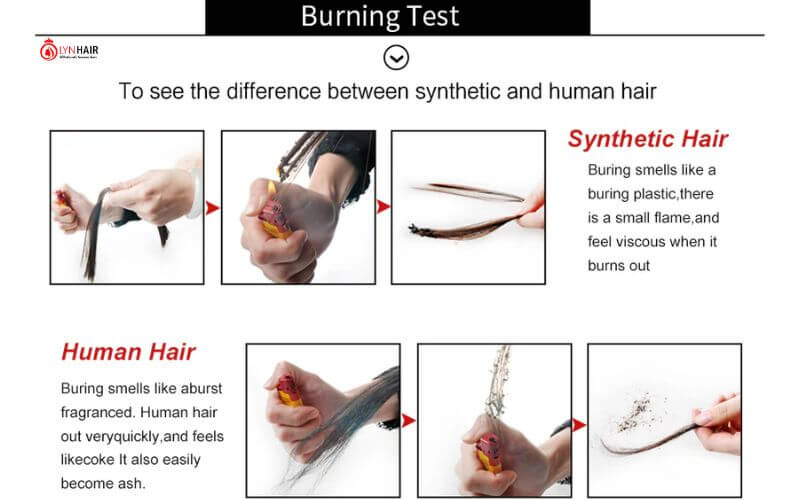
The Burn Test (Composition Check)
Cut a small snippet of hair from the bundle and hold it over a flame:
- 100% Human Hair: Burns quickly with a yellow flame, smells like burnt toast/keratin, and crumbles immediately into a fine, dry black ash when squeezed.
- Synthetic/Plastic Blends: Melts into a hard, plastic bead, emits black smoke, and smells like chemical plastic.
The Smell Test (Chemical Check)
Wet the hair bundle. Pure raw hair should smell like mild soap, herbal washes, or natural hair. If the wet bundle releases a strong chemical odor (similar to sulfur, bleach, or perm acid), it has been processed chemically to strip the cuticles or remove synthetic smell.
8. What Factors Affect the Price of Vietnamese Hair?
When you request a price list from raw vietnamese hair vendors, you will notice a wide variation in pricing. Understanding these key pricing drivers will help you budget effectively:
Length (Inches): Vietnamese hair is measured from 8 inches to 32+ inches. As length increases, the price increases exponentially because sourcing long, healthy hair is much more difficult.
Grade Tier (Single vs. Super Double): Because Super Double Drawn bundles require the factory to manually remove all short hairs, they cost significantly more than Single or Double Drawn bundles.
Textures & Colors: Natural colors (black, dark brown) are the most affordable. Steam-styled textures (curly/wavy) and light colors (blonde, balayage, ombre) require extra labor and select raw materials, raising the price.
Sourcing Channel (Middleman vs. Direct Factory):
-
- Trading Companies: Act as middlemen. They markup prices, have slow communication, and cannot guarantee consistent batches because they buy from multiple small factories.
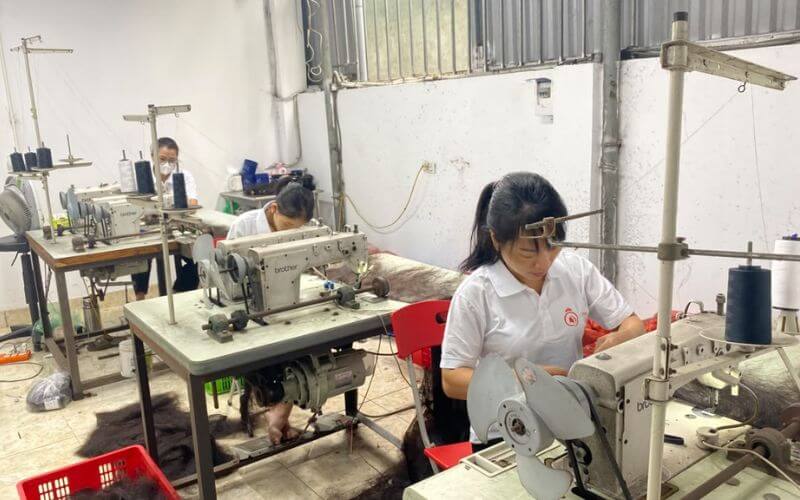
- Direct Factories (e.g., Lyn Hair): Own their production lines. They provide factory-direct pricing, custom color/styling options, and strict quality control.
9. Expert Maintenance Tips for Longevity
To ensure your vietnamese hair bundles last for years, instruct your clients to follow this strict maintenance routine:
The Washing Routine
- Use only sulfate-free and paraben-free shampoos. Sulfates strip the hair of its natural moisture, which is critical since extensions do not receive natural oils from the scalp.
- Always apply a deep conditioning mask or leave-in conditioner. Focus on the mid-shaft to the ends of the hair.
- Wash the hair with cold or lukewarm water to seal the cuticles.
Heat Protection
- Vietnamese hair is highly resistant to heat, but you must always spray a thermal protectant before using flat irons or curling wands.
- Keep your styling tools below 380°F (190°C) (For blonde or bleached hair, keep it below 350°F / 175°C to prevent color fading) . Excessive heat will eventually dry out the cuticle and reduce the lifespan of the extensions.
Night Care
- Never sleep with wet hair. This causes severe matting and tangling at the roots.
- Braid the hair into a loose ponytail before sleeping.
- Use a silk or satin pillowcase, or wrap the hair in a satin bonnet. This reduces friction, which prevents split ends and tangling overnight.
10. Conclusion
Investing in premium hair extensions is the single best way to elevate your brand reputation, command higher service prices, and retain loyal salon clients. Vietnamese hair extensions provide the durability, natural look, and coloring capability that high-paying clients expect.
If you are ready to take your hair business to the next level, partner with a direct, transparent Vietnamese hair manufacturer.
Why Choose Lyn Hair as Your Wholesale Supplier?
- Direct-to-Factory Pricing: No middleman markups.
- Minimum Order Quantity (MOQ) only 3 bundles
- Custom Texture Selection: We sort raw hair specifically into silky baby-thin (for European markets) and coarse/rough (for textured hair markets) textures.
- 100% Customization (OEM/ODM): We customize lengths, colors, textures, and offer private label branding (custom hangtags and packaging).
Contact Lyn Hair today on WhatsApp to get our wholesale price list or book a live video call to inspect our hair product now!
